Four one-bit streams for proving out a DSD chain end to end. Drop them into Decaud (or any player that speaks DSF), watch the format badge, open the signal path, and see what your DAC actually negotiates: native DSD over PCM on capable hardware (the Direct Mac edition, and since 1.5 an opt-in USB path on iPhone), honest decimation everywhere else.
| Track | Rate | Bitstream | Length | Size | |
|---|---|---|---|---|---|
| Aria | DSD64 · 2.8224 MHz | 5.6 Mbit/s | 4:59 | 212 MB | Download ↓ |
| Variatio 5 | DSD64 · 2.8224 MHz | 5.6 Mbit/s | 1:34 | 67 MB | Download ↓ |
| Variatio 5 | DSD128 · 5.6448 MHz | 11.3 Mbit/s | 1:34 | 133 MB | Download ↓ |
| Variatio 5 | DSD256 · 11.2896 MHz | 22.6 Mbit/s | 1:34 | 266 MB | Download ↓ |
Variatio 5 is the same performance at three modulator rates, so you can hear (and measure) exactly what changes when only the rate does. Tags and cover art are embedded. Files are large; that is the format.
Also published as shasums.txt.
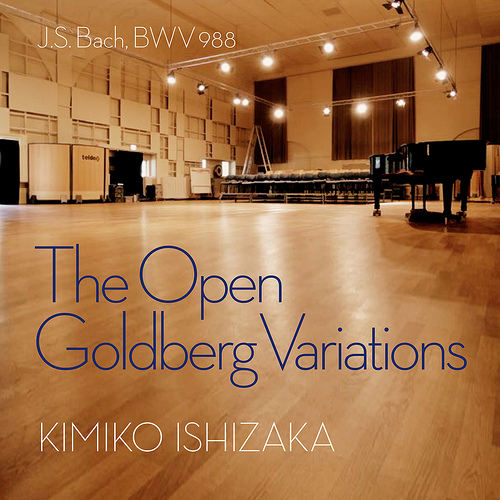
Kimiko Ishizaka, The Open Goldberg Variations. Bach's BWV 988, recorded on a Bösendorfer 290 Imperial at Teldex Studio Berlin in 2012 and given to the public domain under CC0. No rights reserved, by anyone, anywhere. It is the rare recording you can copy, host, convert, and share without asking.
We modulated the 24-bit/96 kHz studio master to one bit with an 8th-order delta-sigma modulator (the open-source sox-dsd). So these are true DSD bitstreams with a PCM past: perfect for exercising a transport, not for arguing about provenance. Decaud's own TrueHz analysis will tell you the same story, because that is the point of it.
Decaud imports, badges, TrueHz-checks, and plays DSD512 files. Whether the output is native depends on the carrier: macOS has no ASIO, so native DSD travels as DSD over PCM (DoP), and DoP carries 16 DSD bits per 24-bit frame. DSD256 needs a 705.6 kHz carrier, which good USB DACs expose; DSD512 needs 1.4112 MHz. A DAC's native DSD512 rating alone does not mean it offers that carrier to CoreAudio. When the carrier is not there, DSD512 plays through precise decimation, labeled as exactly that in the signal path, and the same arithmetic applies to any macOS player that uses DoP. Decaud sets no ceiling of its own: on the Direct Mac edition, native DSD512 needs a DAC you have confirmed supports DoP, Exclusive mode, a readable DSD file, and a successful negotiation of the 1.4112 MHz carrier with a compatible integer format. Otherwise playback uses labeled PCM conversion.
Nothing recorded natively in DSD is old enough to be public domain, so the files above are conversions by necessity. These labels host free native-DSD samples on their own sites, under their own terms:
The Nordic label that records in DXD and DSD256; the standard test material, straight from the source.
A storefront for DSD-first labels with free samplers, up to DSD512.
One-microphone studio recordings from Amsterdam; free compare formats of the same take.
Cookie Marenco's DSD256 sessions; free downloads with an account.